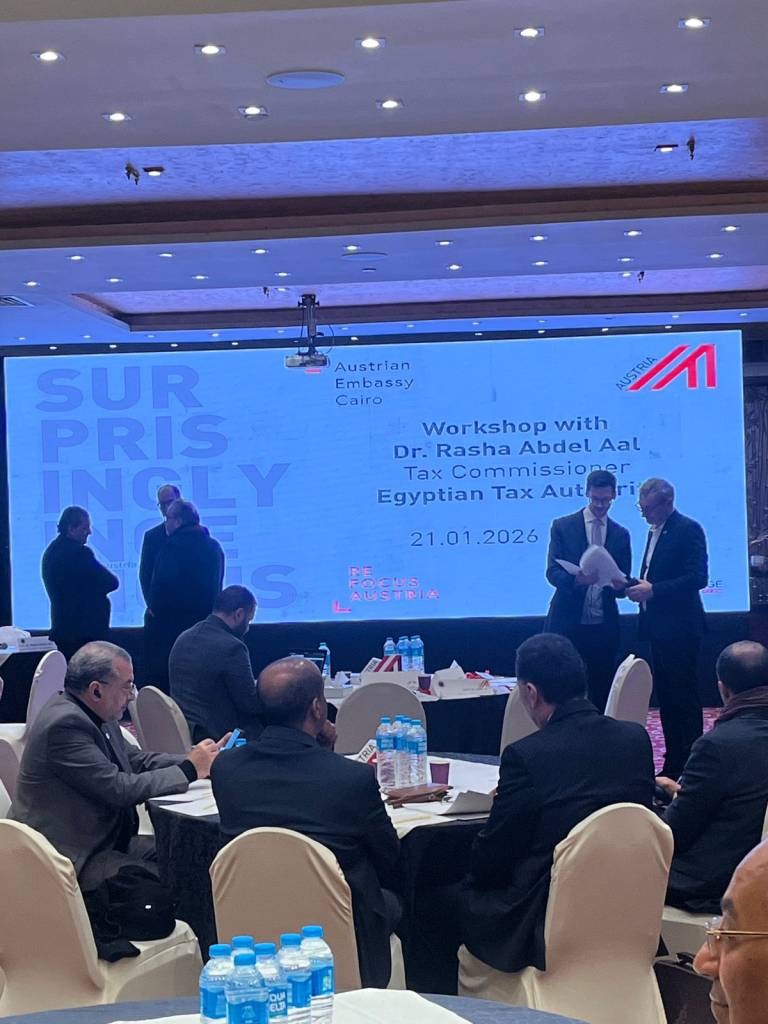
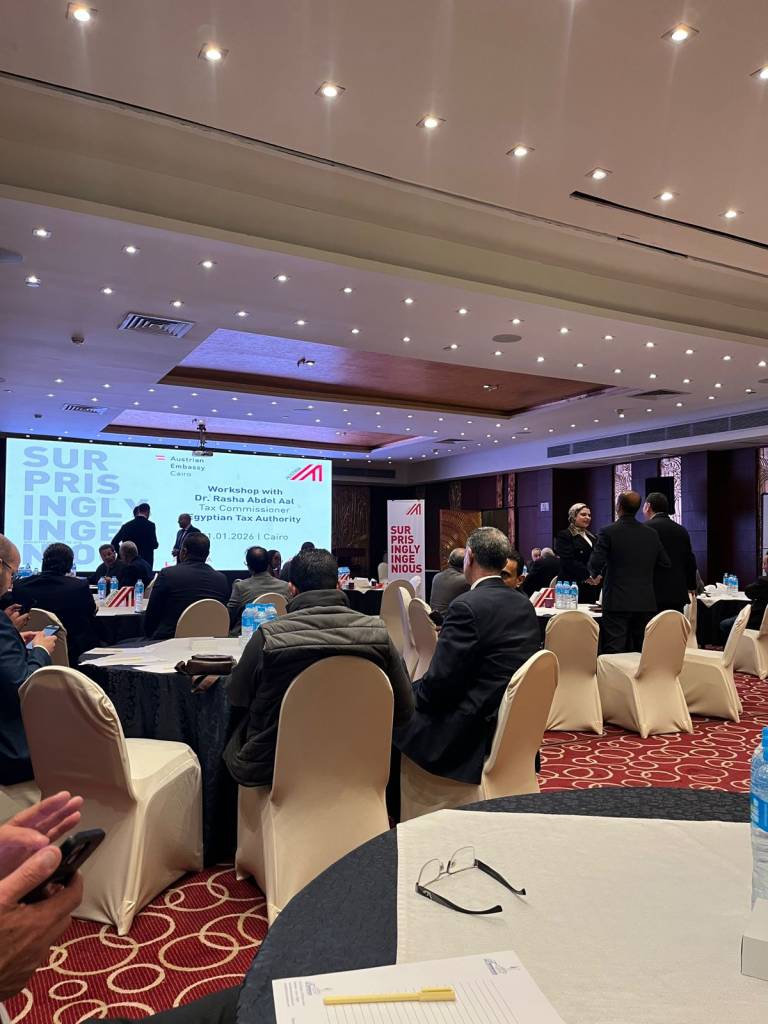
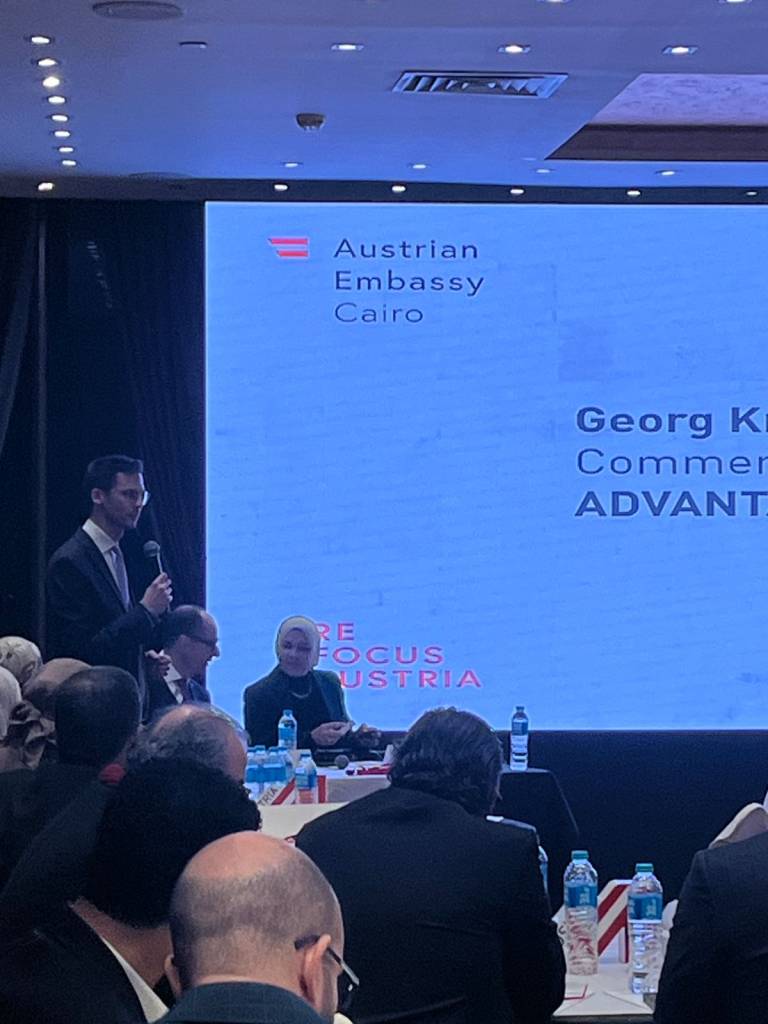
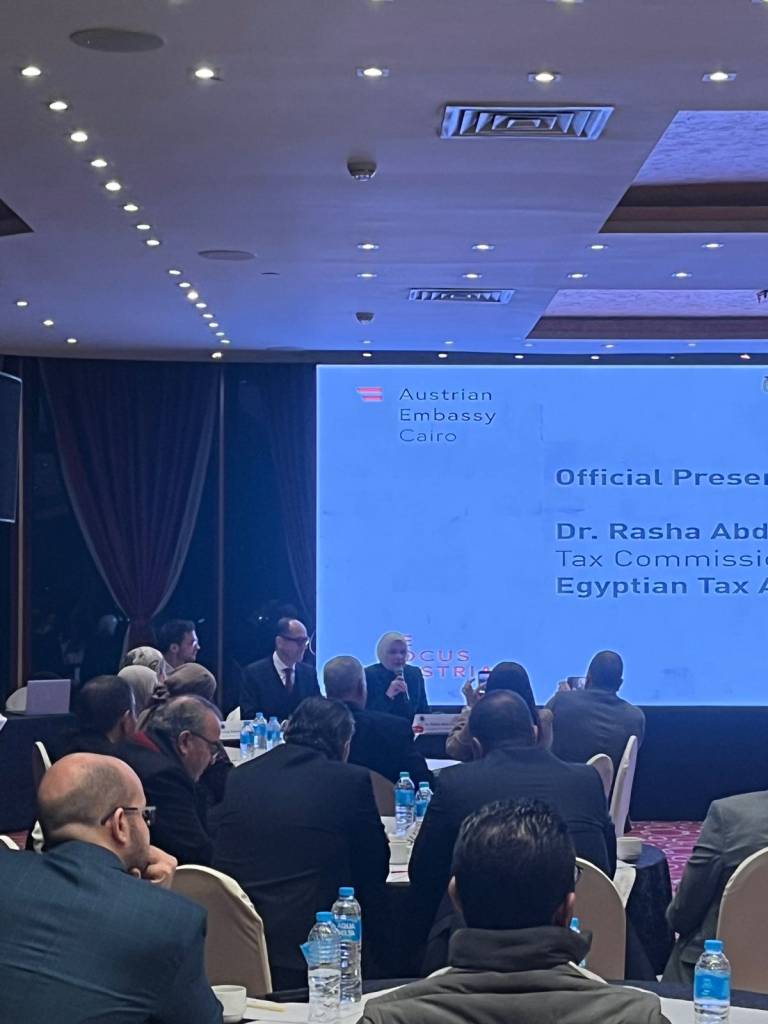
We were pleased to participate in the Tax Workshop hosted by the Austrian Embassy – Commercial Office in Cairo, attended by Mr. Georg Krenn, Austrian Commercial Counsellor, and Dr. Rasha Abdel Aal, Head of the Egyptian Tax Authority, along with a distinguished group of senior officials from the Authority.
The workshop focused on the Second Package of Tax Facilitation Measures, reflecting the government’s commitment to supporting investment and strengthening a partnership of trust with the business community. The discussions emphasized the importance of enhancing the investment climate, reducing the burden on taxpayers, and reinforcing a trust-based relationship founded on voluntary compliance.
The session also highlighted the Authority’s openness to the proposals of the business community and building upon the achievements of the first package. This approach has been translated into a new set of incentives and procedural reforms aimed at improving tax services and streamlining administrative processes.
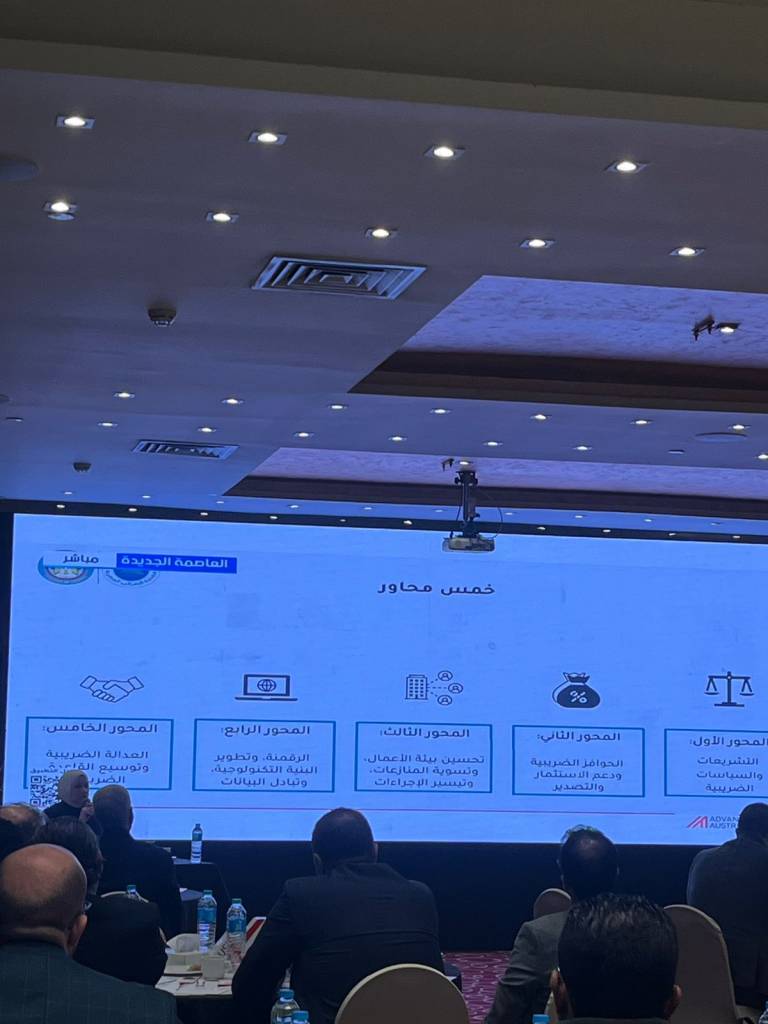
The second package is built around five main pillars, offering a range of incentives for compliant taxpayers, including the introduction of the “Excellence Card”, designed to encourage voluntary compliance and promote greater stability in tax transactions.
The facilitation measures also include accelerating VAT refunds, directly enhancing cash flow for companies and taxpayers. In addition, Dr. Rasha Abdel Aal explained that the package introduces supportive measures for the capital market, including the shift to stamp duty tax instead of capital gains tax on stock exchange transactions, as well as granting tax incentives to encourage company listings on the Exchange for a three-year period, thereby boosting trading volumes and investments.
Furthermore, the Authority is working on launching an integrated electronic system to simplify company liquidation and closure procedures, along with a digital real estate transactions application that enables easy notification and payment of due taxes.
The package also includes a legislative amendment to the VAT Law, reducing the VAT rate on medical devices to 5% instead of 14%, while exempting inputs, components, dialysis supplies, and kidney filters from VAT—supporting the healthcare sector, easing the burden on citizens, and promoting local manufacturing and production.
Second Package of Tax Facilitation Measures
Theme: Encouraging Tax Compliance (Supporting the Compliant Taxpayer)
The second package of tax facilitation measures is built around five main pillars:
Pillar One: Tax Legislation and Policies
Pillar Two: Tax Incentives and Support for Investment and Export
Pillar Three: Improving the Business Environment, Dispute Resolution, and Streamlining Procedures
Pillar Four: Digitalization, Technological Development, and Information Exchange
Pillar Five: Tax Justice and Expansion of the Tax Base
Key Measures and Initiatives
- Incentives for Compliant Taxpayers
A package of incentives and benefits has been prepared for tax-compliant taxpayers to facilitate their dealings with the Tax Authority. This includes the establishment of a “White List” for top compliant taxpayers. Listed taxpayers will receive multiple incentives, such as:
- Expedited VAT refunds
- Certificates and public recognition
- Priority access to specialized services, including advance rulings and the Investor Support Unit
- A dedicated hotline
- Issuance of an “Excellence Card” to streamline in-person and administrative procedures
- Enhancing VAT Refunds
The VAT refund system has been improved to simplify, accelerate, and streamline procedures, thereby improving liquidity for registered taxpayers. Key measures include:
- Refund of credit balances outstanding for more than three or four consecutive tax periods, instead of six
- Expedited refunds within one week for White List taxpayers from the date of a complete application
- Simplified procedures for refunding taxes related to projects governed by Law No. 6 of 2025
- Periodic reviews to increase both approved refund cases and total refunded amounts
- Engagement with taxpayers to correct incomplete or inaccurate applications
- Reduction of front-office review timelines from five days to two days
- Tax Dispute Resolution
The Tax Dispute Resolution Law (Law No. 79 of 2016) has been renewed and enhanced to settle disputes effectively. The package introduces improvements to internal committees and dispute resolution panels to ensure efficiency and reduce the need for further escalation. - Legislative Amendments
Key legislative updates include:
- Exemption of dividend distributions made by Egyptian subsidiaries to an Egyptian resident holding company, subject to defined criteria
- Exemption of Egyptian holding companies from capital gains tax on the sale of unlisted securities, under specific conditions
- Extension of the fixed/proportional tax regime for 2023 and 2024, with mechanisms for SMEs to benefit from incentives under Law No. 6 of 2025
- Premium Tax Services and Automation
- Launch of premium tax service centers, starting with New Cairo and New Alamein, providing core taxpayer services
- Expanded automation to save time and effort
- Capital Market and Investment Support
- Transition of tax treatment for listed securities transactions to a proportional stamp duty regime instead of capital gains tax
- Tax incentives for companies listing on the Exchange for a three-year period, linked to measurable performance indicators
- Simplification and Support Measures
- Establishment of a minimum threshold for bad debts, reducing procedural burdens
- Creation of an electronic advisory platform providing access to all official publications of the Authority
- Issuance of internal executive instructions to expedite legal procedures for company liquidation and closure
- Separation of commercial audits from transfer pricing audits, with a specialized review stage for taxpayer appeals
- Real Estate Tax Simplification
- Flat tax of 2.5% on the sale value of residential units for natural persons, even for multiple transactions, provided they do not indicate real estate trading as a business
- Mobile application to notify and pay due taxes easily, accelerating compliance
- Tax Justice and Informal Economy Integration
- Strengthening electronic systems and linking tax registration to digital platforms
- Awareness and technical support for improved compliance rates
- Allowing taxpayers to substantiate all legitimate costs and preventing fictitious company practices
- Abolishing estimated assessments and transitioning to full reliance on electronic systems
- Support for National Projects and Private Sector
- Deduction of interest on loans obtained by private companies in national projects
- Exemption from the interest deductibility cap for such companies
- Legislative amendments to VAT and fee laws to standardize treatment and remove inconsistencies
- Healthcare and Industrial Support
Extension of VAT payment suspension for industrial machinery and equipment for up to four years
VAT rate on machinery, equipment, and medical devices extended to 5%
Exemption of inputs, parts, and supplies for dialysis machines and kidney filters